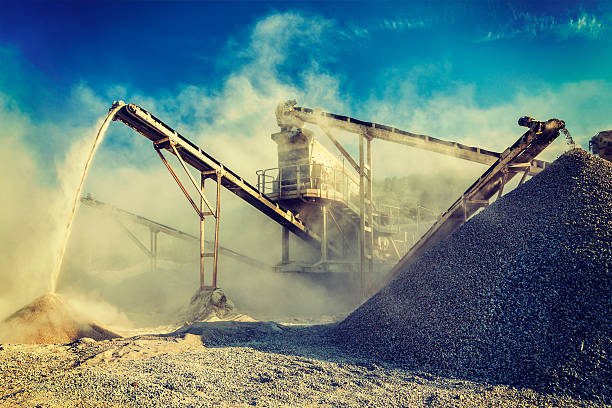
HSI vs VSI: Choosing the Right Crushing Plant
15 Aug 2025 | Admin
In the world of aggregate production, mining, and quarrying, choosing the right type of crusher is crucial. The two most widely used impact crushers are Horizontal Shaft Impactor (HSI) and Vertical Shaft Impactor (VSI). Both play a key role in breaking down rocks and minerals into smaller, usable sizes, but they differ in design, working principles, and applications. Understanding these differences is essential to ensure efficiency, cost-effectiveness, and high-quality output in your crushing operations.
What is an HSI Crusher?
A Horizontal Shaft Impactor (HSI) is a type of crusher that uses a high-speed horizontal rotor with hammers or blow bars to strike material against fixed impact plates. This impact shatters the rock, reducing it to smaller sizes. HSIs are known for producing cubical-shaped aggregates, making them ideal for applications where shape and consistency are critical, such as in road construction and concrete production.
What is a VSI Crusher?
A Vertical Shaft Impactor (VSI) works differently. It uses a high-speed rotor that throws material against anvils or rock shelves, creating a "rock-on-rock" or "rock-on-metal" crushing action. This method is highly effective for producing fine aggregates and high-quality sand. VSI crushers are widely used in industries where precision and consistency in particle size are essential.
Key Differences Between HSI and VSI
- Design & Mechanism: HSI has a horizontal shaft and blow bars, while VSI has a vertical shaft with a rotor system.
- Crushing Action: HSI uses impact with blow bars; VSI relies on rock-on-rock or rock-on-metal impact.
- Output Shape: HSI produces cubical aggregates, VSI produces fine sand and well-graded particles.
- Material Suitability: HSI is better for medium-hard to hard materials; VSI is excellent for abrasive and softer stones.
- Applications: HSI is often used in primary and secondary crushing, while VSI is commonly used in tertiary or final-stage crushing.
When to Use HSI?
Choose HSI if your project requires:
- High reduction ratio for larger rocks
- Production of cubical and consistent aggregates
- Applications in road construction, concrete production, and recycling plants
- Processing medium-hard to hard materials like granite, basalt, and limestone
When to Use VSI?
Choose VSI if your project requires:
- Fine aggregates or manufactured sand for construction
- High-quality shaping of aggregates
- Applications in glass recycling, sand making, and cement plants
- Production of consistent particle sizes with minimal flaky particles
Pros and Cons of HSI
- Pros: High reduction ratio, cubical shape, versatile in primary/secondary crushing.
- Cons: Higher wear on blow bars, may not be efficient for producing very fine aggregates.
Pros and Cons of VSI
- Pros: Excellent for sand production, low operating cost for fines, produces high-quality aggregates.
- Cons: Not ideal for large feed sizes, limited in primary crushing stages.
Industry Applications
Both HSI and VSI crushers have distinct advantages depending on industry needs:
- HSI: Road building, construction aggregates, recycling, cement plants.
- VSI: Sand manufacturing, glass recycling, mining operations, industrial minerals.
HSI vs VSI: Which One Should You Choose?
The choice between HSI and VSI ultimately depends on the type of material you are processing, the desired output size, and the specific industry requirements. If you need cubical aggregates for concrete or asphalt, HSI is the better choice. If your focus is on high-quality sand or fine aggregates, then VSI is the ideal option.
Conclusion
Both HSI and VSI crushers are powerful machines that serve different purposes in crushing operations. Instead of viewing them as competitors, many modern crushing plants use a combination of both, where HSI handles primary and secondary stages, and VSI takes care of final shaping and sand production. By understanding their unique strengths, quarry owners and contractors can make informed decisions that improve efficiency, reduce costs, and ensure superior-quality output.
Contact Us
The company has established her manufacting in the Borvai(Vadagam, Aravalli Dist., Gujarat) last 21 Years and looks forward to move into other strategic markets with a commitment to become a truly global company. SAI ENGINEERING WORKS is committed to quality work and confident to meet the challenging demands of customers.